Zhejiang NHU Co., Ltd

Zhejiang NHU Co., Ltd

specializing in chemical manufacturing

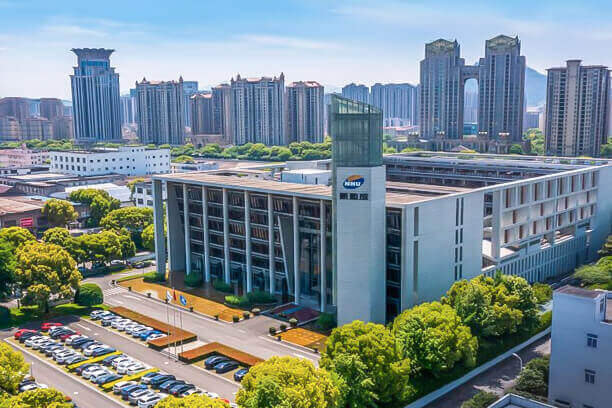
Founded in 1999 and listed in 2004 ,Zhejiang NHU Co., Ltd. has long embraced innovation-driven growth and market-oriented development. We specializes in the R&D, production, sales and technical services of fine functional chemicals, covering nutrition supplements, aromatics and polymer materials.

We...

Read More

Products

Capabilities

  1. Professional Support

    Product selection guidance, volume quotation, sample provision, and technical consultation ensure efficient purchasing decisions.

  2. Reliable Supply Chain

    As a certified manufacturer, we ensure stable chemical inventory, flexible production scheduling, and global logistics support.

  3. Quality & Compliance

    All products meet international standards (ISO, GMP, FCC/USP/EP), with each shipment accompanied by COA, MSDS, and optional TDS.

Zhejiang NHU Co., Ltd

Culture

Innovation

We continuously develop new chemical solutions and refine processes to meet evolving industry demands.

Sustainability

Our operations prioritize environmental stewardship, responsible sourcing, and long-term resource efficiency.

Reliability

Consistent quality, stable supply, and responsive support ensure our partners can trust us in every project.

News Center

Zhejiang NHU Co.,Ltd

On April 13, 2026, the 2026 Shandong Social Responsibility Development Conference was grandly held in Jinan. Shandong NHU Holding Co., Ltd., a subsidiary of Zhejiang NHU Co.,Ltd., was awarded the honor of "2025 Shandong Social Responsibility Enterprise · Social Welfare". Hosted jointly by Dazhong Press Group, the Financial Work Office of CPC Shandong Provincial Committee, Shandong Federation of Industry and Commerce, Shandong SASAC, Shandong Administration for Market Regulation and Shandong Social Work Association, the conference shortlisted 80 enterprises and 15 entrepreneurs for relevant awards. Having rooted in Shandong for 19 years, Shandong NHU always adheres to the corporate tenet of "Creating Wealth, Empowering Employees and Benefiting Society", stays committed to green development, and fulfills corporate social responsibilities in environmental protection, employee care and public welfare. Aligned with the national dual-carbon goals, the company drives green transformation through technological innovation. It has improved environmental management, carbon footprint certification, water resource recycling and solid waste resource utilization systems. It has obtained EcoVadis Gold Rating, ranking among the top 5% of global participants, with its MSCI ESG rating upgraded to Grade A. Adhering to people-oriented philosophy, the company relies on its unique "Mentor Culture" to build a complete system of mentorship training, health protection and humanistic care, fostering harmonious labor relations. It actively participates in rural revitalization, student aid and poverty alleviation, with accumulated donations in cash and materials exceeding 10 million yuan. The honor serves as both recognition and motivation. Going forward, Shandong NHU will further strengthen ESG governance, increase investment in green technological innovation, improve the long-term public welfare mechanism, and drive the industrial chain to fulfill social responsibilities jointly, contributing to industrial upgrading and green sustainable development. CONTACT INFORMATIONWebsite:https://www.zhejiang-nhu.com/Phone:+8615371019725Email:sales7@bouling-chem.com 

NHU Japan Co.,Ltd.

Operating a chemical plant in Japan comes with unique challenges and expectations. Local customers value precise consistency and clear communication. Regulatory standards extend far beyond paperwork, affecting every input, each batch, and how every person on the shop floor carries out their tasks. We have learned over decades that many global headlines miss some of those details, and the real lessons get forged in hot reactors and real-world trials. Suppliers and partners like NHU Japan Co.,Ltd. know that quality assurance means more than hitting numbers on a COA. Reliably producing additives and fine chemicals needs a production team that takes pride in every load, constantly chasing incremental improvement. Skilled engineers tweak parameters not just for the sake of efficiency, but to protect customers from unpredictable outcomes, each time. The feedback loop from end-users to our R&D lab shapes how we evolve our product lines and production approach.Reliability does not happen by accident. Years of experience have taught us to hunt down root causes the first time an issue shows up—whether that comes from a small raw material quality shift or a blip in utility supply. For example, back in 2018, we dealt with a supply chain disruption caused by a sharp price increase in a key solvent used for specialty esters. Other companies waited for prices to fall or switched to less costly sources at the expense of finished quality. We took a different path: engaging directly with vendors and tightening our internal controls. We supported customers, providing them with manufacturing transparency until the market stabilized. This kind of partnership builds long-term loyalty, both up and down the value chain.Recent years have exposed new weaknesses in international sourcing that affect production timelines. Small delays at the port or missing certificates can translate to multi-day halts in the production schedule. At our plant, we don’t just plan around lead times—we double-check supplier reliability, and keep regular communication lines open, especially with logistics teams. We run multiple mock drills for critical items. Contamination prevention gets treated as a full-time program, not just an audit line item. Our technical staff knows exactly how to spot early warning signs when incoming lots deviate, triggering upstream investigation rather than simply blaming the vendor. It’s an active process—we intervene, document, and resolve. Reinvesting in local talent and continuous training, we treat every team member as the link between laboratory promise and customer expectation.Strict environmental rules in Japan require process innovation. Solvent recovery cycles, heat integration, and advanced filtration help us shrink emissions and reduce waste. These improvements carry considerable upfront costs, especially when compared to some overseas producers. Yet, they matter for our community and for the long-term sustainability of our business. When disasters happen elsewhere—like major facility fires or pollution events—customers come knocking, searching for stable partners with clean records and real-world problem-solving stories. We often share our in-house modifications to promoted catalytic reactions, making sure our peers in industry can see the potential for safety gains if they consider investing, too. Elevating standards strengthens the industry for everyone.Information flow runs in both directions. As manufacturers, we insist on transparency not just in our lab reports but in our daily operations. Partners want to see proof that every specification, from purity to trace metal content, reflects honest, reproducible results. We maintain close communication with key stakeholders, updating them through digital dashboards and routine status checks. If we predict a supply squeeze or detect unexpected shifts in upstream raw material quality, we alert clients straight away. Delaying tough conversations never works. In our experience, open communication solves more problems than technical perfection alone.We encourage our younger chemists and process engineers to speak up when they spot patterns in plant data or customer complaints not captured by formal documents. Their hands-on perspective often highlights weak spots overlooked by process documentation. In our last major process review, a line operator identified tiny increases in utility consumption tied to worn valve seats—an observation that, when investigated, helped us avoid greater unplanned shutdowns months down the line. That’s why we choose to invest heavily in cross-disciplinary teams and ongoing education. This approach generates solutions grounded in real-world experience, not just theoretical models.Trust separates top-tier chemical producers from commodity traders. Customers rely on our honesty, an open approach to problem-solving, and our willingness to admit mistakes and fix them fast. The most important lessons we’ve learned don’t come from ISO manuals or management seminars. They come from years of solving problems—reacting to sudden feedstock impurity, learning from a failed scale-up, or acting quickly to stabilize output amid equipment shutdowns. We document failures and lessons right alongside our wins, so everyone in the company can access and use this hard-won knowledge. Over time, this creates a company culture where transparency and realistic self-evaluation serve as bedrock principles.Companies like NHU Japan Co.,Ltd. create stronger value for society and clients when they operate with pride, responsibility, and a view beyond the bottom line for the next quarter. Reputations get built—and rebuilt—one shipment at a time. Our journey illustrates the power of local knowledge, disciplined teamwork, and respect for every stage in the chemical life cycle. By keeping those foundations solid, we deliver not just molecules, but confidence in every drum, tote, and shipment.

Nhu Performance Materials GmbH

Every day, we clock in before sunrise, roll up our sleeves and trust the work—it yields results that speak much louder than glossy ads or boardroom promises. Many in this industry like to spin stories about breakthroughs, but in our world, chemistry comes with a precise responsibility. We don’t have the luxury of vague claims. Each batch we run carries the weight of contracts, consumer expectations, and strict European regulation.For years, the German specialty chemicals sector has seen outside players push forward, but few have put down roots like Nhu Performance Materials GmbH. When you commit to blending and fine-tuning raw materials on European soil, the result is different. European standards leave little room for shortcuts. On our shop floor, the electronic systems keep every process traceable. Any new chemical component must clear hurdles—from REACH compliance to regular on-site audits—and we’ve come to respect these checks. They force suppliers and operators to collaborate, not just for yield optimization but for the safety of both the end user and our own team. Nhu’s investment in system upgrades—modern filtration, energy recycling, advanced dust collection—show that long-term players value both environment and worker health. Anybody can buy a truckload of intermediate in Asia, but building a plant across from your largest clients takes persistence and a solid reputation.In recent years, the flexible way many chemical companies operated hasn’t survived mounting local rules and green targets. Manufacturers have to address every scrap of waste, every gram of byproduct gas, and each cradle-to-grave life cycle. On our line, this looks like drag and drop logistics. Huge silos now hold recycled solvents. RFID tags track origin and transformation. Regulators inspect our reports with expectations for transparent record-keeping. Nhu has pivoted to these realities by not just talking about sustainability but restructuring processing lines to cut chemical losses at the elbow, not only at the barrel. That brings down volumes of hazardous waste, but the core benefit shows up in the community around our facility: clearer air, less noise, and steady jobs for local residents.The public eye in Europe lingers on chemical companies differently than in many parts of the world. There’s little tolerance for greenwashing, so any public sustainability target must tie back to ongoing production upgrades. We can’t afford surprise shutdowns or contamination incidents. Our compliance team rarely gets a week without a new documentation demand—German agencies stay on top of imported materials, storage permits, and even minor process changes. Nhu’s approach, in my experience, insists on running more pilot batches and lab validations to get it right the first time. Some in the industry grumble at this slow pace, but it means fewer recalls and more stable contracts with our core buyers.Machines hum and pipes stretch overhead, but skill still matters here as much as anywhere. Training lab technicians and process engineers in Germany costs more than in neighboring countries, but the investment pays off. On our shifts, team members troubleshoot flow irregularities or spot a compound’s off-color tint before it reaches the next stage. Retaining skilled staff in such a high-tech environment draws on a mix of good wages, continuous learning, and a strong safety culture. Nhu has put real money behind apprenticeships, support for advanced certifications, and partnerships with local institutes to bring new talent into chemical operations, not just sales or research.This model attracts global partners who need stable, compliant sourcing. From custom polymer additives to next-gen intermediates, Nhu’s team understands that credibility as a European producer starts with the on-the-ground experience of operators and project coordinators. Our people ask harder questions about every raw material, every off-gas stream, and every packaging method. There’s a respect for the craft here that goes beyond balance sheets—it travels through every tank wash and every sample test.Germany’s chemical sector doesn’t just rest on tradition; it constantly faces pressure to adapt. Working with Nhu, I’ve seen how customers in Europe, North America, and Asia demand specialty materials that withstand regulatory scrutiny at every step. You don’t just tinker with formulations behind glass. Customer visits sometimes last several days, deep-diving into proprietary blends and micro-scale pilot reactors. A successful product launch ties lab-scale prototypes to full-container production with no margin for error. Sourcing raw materials from trusted partners, running multi-week stability studies, and coordinating logistics to avoid bottlenecks—all these steps shape how manufacturers like us compete. Nhu’s direct connection to technology partners adds another layer, opening doors for automation, data capture improvements, and digital monitoring that older factories often lack.No one in the sector escapes price swings in electricity, gas, or key chemical feedstocks. This past year, we juggled supply chain headaches caused by upstream plant outages and shaky global transport. Flexibility in production might sound nice in theory, but in reality, keeping multiple product lines ready for customer orders means staggered maintenance shifts and steady communication between procurement, logistics, and technical teams. Nhu’s model keeps procurement and production close together—so when a disruption hits, decisions happen quickly. We’ve built alternate sourcing contracts and invested in on-site analytical equipment to test incoming shipments before they enter the main process. These steps keep the factory humming, keep customers satisfied, and avoid costly downtime.Manufacturers focusing on specialty performance materials sometimes risk over-promising new supply or underplaying complexity. Real-world production lives in shades of gray: schedule slips, shipping delays, and ever-shifting customer specs. What I’ve seen from our leadership at Nhu is a practical bias—communicate honestly with both workers and customers and own every challenge as it happens. Investing in predictive maintenance, digital process control, and deep local partnerships cushions against the blow of outside turmoil, but the daily grind still sets the pace.As a manufacturer who has taken every project from sample blends to full runs, partnering with a team that values detail, safety, and long-term growth makes all the difference. Big claims in annual reports fade unless they tie directly back to real output and content workforce. The market may chase headlines about digital transformation or circular economy breakthroughs, but at the end of the day, solid chemistry relies on relentless process improvement, tough audits, and shared knowledge across old and new staff alike. Nhu’s willingness to put those values ahead of short-term margin-hunting earns respect—not just from buyers, but from those of us with grease under our nails and skin in the game.